Pearl: Everything You Need to Know
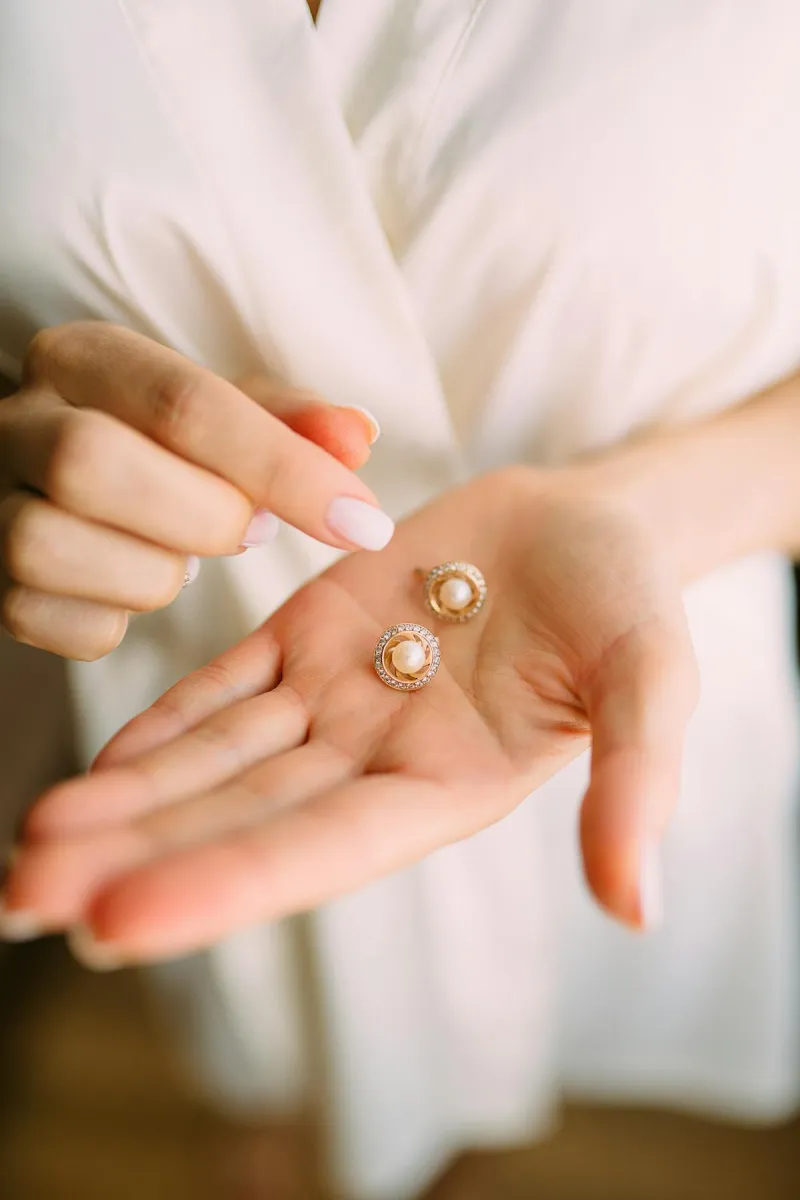
The pearl holds a unique distinction in the world of gemstones: it is the only gem created by a living organism. Unlike crystals that form deep within the Earth over millions of years, pearls are produced inside the soft tissue of molluscs – primarily oysters and mussels – as a natural defence against irritants. This organic origin gives pearls a warmth and lustre that no mined gemstone can replicate. Prized by civilisations for thousands of years, from ancient Rome to the royal courts of Renaissance Europe, pearls remain one of the most elegant and timeless choices in fine jewellery.
Pearl Properties and Characteristics
Pearls are classified as organic gems, meaning they originate from biological processes rather than geological ones. Their beauty stems from nacre – a composite material secreted by the mollusc, consisting of microscopic layers of aragonite (a form of calcium carbonate) bound together by conchiolin, a natural protein. It is the interaction of light with these thousands of semi-transparent layers that produces the characteristic pearly lustre, also known as orient, that makes pearls so captivating.
Because pearls are relatively soft compared to mineral gemstones, they require more careful handling. However, their unique optical properties, organic warmth, and cultural significance have ensured their place among the most treasured gems in human history.
| Property | Details |
|---|---|
| Type | Organic gem (biogenic) |
| Mohs Hardness | 2.5 – 4.5 |
| Composition | Nacre (aragonite CaCO3 + conchiolin) |
| Lustre | Pearly (nacreous) |
| Specific Gravity | 2.60 – 2.85 |
| Refractive Index | 1.52 – 1.69 |
| Origin | Molluscs (oysters and mussels) |
| Nacre Structure | Layered aragonite platelets with organic binder |
| Birthstone Month | June |
Types of Pearls
Pearls are broadly divided into saltwater and freshwater varieties, with four main commercial types dominating the market. Each type has its own character, price range, and appeal.
Akoya Pearls
Akoya pearls are the classic saltwater pearl, cultivated primarily in Japan and to a lesser extent in China and Vietnam. Produced by the Pinctada fucata oyster, Akoya pearls are renowned for their sharp, mirror-like lustre and perfectly round shapes. They typically range from 6 to 8 millimetres in diameter, though specimens up to 10 millimetres are occasionally produced. The most prized Akoya pearls display a bright white body colour with a rose or silver overtone. Japan's cool waters produce nacre with exceptionally tight, uniform layering, which accounts for the intense lustre that has made Akoya the benchmark for pearl quality for over a century.
South Sea Pearls
South Sea pearls are the largest and among the most valuable cultured pearls in the world. Produced by the Pinctada maxima oyster in the warm waters of Australia, Indonesia, the Philippines, and Myanmar, these pearls typically measure between 9 and 16 millimetres, with exceptional specimens exceeding 20 millimetres. South Sea pearls come in two primary varieties: white and golden. Australian farms are known for producing silvery-white pearls with a satiny lustre, while Philippine and Indonesian farms are the primary source of golden South Sea pearls. The thick nacre of South Sea pearls – often 2 to 6 millimetres – gives them a deep, warm glow rather than the sharp reflective lustre of Akoya pearls.
Tahitian Pearls
Tahitian pearls, sometimes called black pearls, are cultivated in the lagoons of French Polynesia using the Pinctada margaritifera (black-lipped) oyster. Despite their common name, Tahitian pearls are rarely pure black. Instead, they display an extraordinary range of dark colours including charcoal grey, silver, green, aubergine, and the highly coveted "peacock" – a dark green-grey with rose and purple overtones. They typically range from 8 to 14 millimetres in diameter. Tahitian pearls are the only naturally dark cultured pearls; their colour comes from the natural pigments within the nacre of the black-lipped oyster, not from treatment or dyeing.
Freshwater Pearls
Freshwater pearls are cultivated in rivers, lakes, and ponds, predominantly in China. They are produced by various species of freshwater mussels, most commonly Hyriopsis cumingii. Freshwater pearls are the most affordable type, making them an accessible entry point into pearl jewellery. They range from approximately 5 to 12 millimetres and come in a wide variety of shapes, including round, oval, button, baroque, and coin. Historically, freshwater pearls were considered inferior to saltwater varieties, but modern Chinese cultivation techniques have dramatically improved quality. Today's top-grade freshwater pearls can rival Akoya pearls in roundness and lustre at a fraction of the price. They also occur naturally in white, pink, lavender, and peach body colours.
How Pearls Form
Understanding how pearls form helps explain why they are so remarkable and why quality varies so significantly.
Natural Pearls
Natural pearls form without any human intervention. When a foreign object – such as a parasite, a grain of sand, or a small piece of shell – becomes lodged inside a mollusc's tissue, the animal responds by coating the irritant with layers of nacre. Over months and years, these layers build up to form a pearl. Natural pearls are exceedingly rare today, as natural oyster beds have been largely depleted by centuries of harvesting and environmental changes. Genuine natural pearls command extraordinary prices at auction, with historic strands selling for millions of pounds.
Cultured Pearls
Cultured pearls are formed through the same biological process as natural pearls, but with human assistance. A skilled technician surgically implants a bead nucleus (typically made from freshwater mussel shell) along with a small piece of mantle tissue from a donor mollusc into the host oyster or mussel. The host animal then coats the nucleus with nacre, just as it would a natural irritant. The culturing period varies: Akoya pearls typically require 10 to 18 months, while South Sea and Tahitian pearls may be cultured for 18 months to three years or more. Longer cultivation generally produces thicker nacre and superior lustre. It is worth noting that virtually all pearls sold today are cultured, and this in no way diminishes their beauty or value.
Pearl Quality Factors
Several factors determine the quality and value of a pearl. Understanding these will help you make a confident purchase.
Lustre
Lustre is widely considered the most important quality factor in pearls. It refers to the intensity and sharpness of light reflected from the pearl's surface and near-surface layers of nacre. A pearl with excellent lustre will show bright, sharp reflections and a sense of depth, almost as though the light is emanating from within the pearl itself. Poor lustre results in a dull, chalky appearance. Lustre is directly related to the quality and thickness of the nacre: finer, more uniform nacre layers produce superior lustre.
Surface Quality
Because pearls are natural products, perfectly flawless specimens are rare. Surface characteristics may include spots, bumps, pits, wrinkles, and scratches. Pearls are typically graded from clean (no visible blemishes) to heavily blemished. Minor surface imperfections are normal and do not significantly affect beauty, particularly if they are positioned where they will be hidden by a setting or drill hole. However, large or numerous blemishes detract from both appearance and value.
Shape
Perfectly round pearls are the rarest and most valuable shape. Other shapes include near-round, oval, button (slightly flattened), drop (pear-shaped), semi-baroque (slightly irregular), and baroque (highly irregular). While round pearls command the highest prices, baroque and drop-shaped pearls have a distinctive character and can be extraordinarily beautiful in their own right, often at a more accessible price point.
Size
Pearl size is measured in millimetres. Larger pearls are rarer and more valuable, all other factors being equal. Size ranges vary by pearl type: freshwater pearls may be as small as 2 millimetres, while South Sea pearls can exceed 20 millimetres. Even a one-millimetre increase in size can result in a significant price jump, particularly in the larger size categories.
Colour
Pearl colour has three components: body colour (the dominant overall colour), overtone (a translucent secondary colour that appears over the body colour), and orient (an iridescent play of colour seen on some fine pearls). White with rose overtone is the most classic combination for Akoya pearls, while deep gold is the most prized colour for South Sea pearls. Colour preference is largely subjective, though certain combinations consistently command higher prices within each pearl type.
Nacre Thickness
Nacre thickness is a critical factor in pearl durability and beauty. Thin nacre can result in a dull appearance, visible nucleus, and a pearl that may chip or peel over time. Thick nacre produces deeper lustre and ensures the pearl will maintain its beauty for generations. Reputable pearl dealers will disclose nacre thickness, and it is particularly important to verify with Akoya pearls, where shorter cultivation periods can sometimes produce thin nacre coatings.
Pearl Grading Systems
Unlike diamonds, which follow the standardised GIA 4Cs system, pearl grading lacks a single universal standard. Two primary systems are in common use.
The AAA System
The AAA grading system is widely used for Akoya and freshwater pearls, particularly in the American and European markets. It ranges from AAA (the highest) to A (the lowest commercially acceptable grade):
- AAA – Virtually flawless surface with very high lustre. The top 1–5% of a harvest.
- AA+ – Very high lustre with only minor surface blemishes visible upon close inspection.
- AA – High lustre with some minor blemishes covering no more than 10–20% of the surface.
- A+ – Medium lustre with noticeable blemishes covering up to 25–30% of the surface.
- A – Lower lustre with blemishes covering a significant portion of the surface. Still acceptable for commercial jewellery.
The A–D Tahitian System
The Government of French Polynesia regulates Tahitian pearl exports using a different system that grades from A to D:
- A – The highest grade. Clean surface or very minor blemishes on less than 10% of the surface, with very good to excellent lustre.
- B – Minor blemishes on less than one-third of the surface with good lustre.
- C – Moderate blemishes on less than two-thirds of the surface. Lustre may be average.
- D – Blemishes covering more than two-thirds of the surface, but lustre remains acceptable. Pearls below D grade cannot be legally exported from French Polynesia.
It is important to note that pearl grading can vary between dealers, as there is no single independent body that certifies pearl grades in the way that GIA certifies diamonds. Always purchase from reputable dealers who are transparent about their grading criteria.
Pearl Treatments and Enhancements
Many pearls undergo some form of treatment after harvesting. Understanding these processes helps ensure you know exactly what you are buying.
- Bleaching – The most common treatment, particularly for Akoya pearls. Freshly harvested pearls are gently bleached to achieve a uniform white body colour and remove any organic discolouration. This is a stable, widely accepted treatment.
- Pinking – After bleaching, many Akoya pearls are given a light pink tint to enhance the desirable rose overtone. This is done using a dilute organic dye and is considered standard practice in the industry.
- Dyeing – Some pearls, particularly freshwater pearls, are dyed to achieve colours that are not naturally occurring or to create uniform colour in strands. Dyed pearls should be clearly disclosed and are significantly less valuable than naturally coloured specimens.
- Irradiation – Freshwater pearls may be irradiated to darken their colour, producing grey or blue-black shades. This treatment affects the nacre and is generally permanent.
- Coating – Some lower-quality pearls are coated with lacquer or other substances to improve lustre. This is not a durable treatment and is not considered acceptable in fine jewellery.
- Maeshori treatment – A Japanese technique applied to some Akoya pearls involving a combination of heat and organic solution to improve lustre. Its use is debated within the industry.
Pearl Care and Maintenance
Pearls are among the softest gems used in jewellery, with a Mohs hardness of just 2.5 to 4.5. Their organic composition makes them vulnerable to chemicals, acids, and environmental damage. Proper care is essential to preserving their beauty.
- Avoid chemicals – Perfume, hairspray, cosmetics, and household cleaning products can damage nacre over time. Always apply perfume and cosmetics before putting on your pearl jewellery, and follow the "last on, first off" rule.
- Avoid acids – Pearls are composed of calcium carbonate, which is highly sensitive to acids. Even mild acids such as lemon juice, vinegar, or perspiration can slowly dissolve nacre. Wipe pearls with a soft, damp cloth after wearing to remove any residue.
- Store separately – Pearls can be easily scratched by harder gemstones and metals. Store them in a soft cloth pouch or a separate compartment of your jewellery box, away from other pieces. Never store pearls in an airtight container, as they need a small amount of moisture to prevent the nacre from drying out and cracking.
- Clean gently – Wipe pearls with a soft, slightly damp cloth after each wear. For a deeper clean, use lukewarm water with a very mild soap, rinse thoroughly, and allow to air dry on a soft cloth. Never use ultrasonic cleaners, steam cleaners, or abrasive cloths on pearls.
- Restring regularly – Pearl strands should be restrung every one to two years with regular wear, or whenever the silk thread shows signs of stretching or discolouration. Ensure the strand is knotted between each pearl to prevent rubbing and to limit loss if the strand breaks.
For more detailed guidance, see our comprehensive jewellery care guide.
Pearl Jewellery Types
Pearls are extraordinarily versatile and can be set into virtually any type of jewellery. Their understated elegance makes them appropriate for both formal occasions and everyday wear.
Pearl Strands and Necklaces
The classic pearl strand is perhaps the most iconic piece of jewellery in existence. Strands are categorised by length: choker (35–40 cm), princess (43–48 cm, the most popular length), matinee (50–60 cm), opera (70–90 cm), and rope (over 90 cm). A well-matched strand of Akoya or South Sea pearls, where each pearl is carefully selected for consistency in size, colour, lustre, and surface quality, represents one of the finest achievements in pearl jewellery. Single pendant necklaces featuring a single pearl drop are a more contemporary and minimalist option.
Pearl Earrings
Pearl stud earrings are a wardrobe essential. A pair of fine Akoya or South Sea pearl studs complements virtually any outfit and suits every age. Pearl drop earrings offer a more dramatic look, and baroque pearl earrings have become increasingly popular for their organic, contemporary aesthetic.
Pearl Rings
Pearl rings make a distinctive statement, though they require more careful wear due to the pearl's softness. Pearl cocktail rings are popular for special occasions, and pearl engagement rings are chosen by those who value individuality and vintage-inspired style. Settings that protect the pearl, such as bezel or halo designs, are recommended for rings intended for frequent wear.
Pearl Bracelets
Pearl bracelets range from classic multi-strand designs to modern bangles with a single pearl accent. As bracelets are subject to more impact than other jewellery, it is particularly important to choose pearls with thick nacre and to be mindful of activities that could cause damage.
Buying Tips for Pearls
Whether you are purchasing your first pair of pearl studs or investing in a fine South Sea strand, these guidelines will help you make a confident decision.
- Prioritise lustre above all – A pearl with outstanding lustre will always look more beautiful than a larger pearl with dull, chalky lustre. Lustre is what gives a pearl its life and beauty.
- Buy from reputable dealers – Since pearl grading is not standardised, the reputation and expertise of the dealer matters enormously. Look for dealers who provide detailed information about pearl type, origin, treatment, nacre thickness, and grading criteria.
- Check nacre thickness – Ask about nacre thickness, particularly for Akoya pearls. A minimum of 0.4 millimetres on each side is recommended; 0.6 millimetres or more is ideal. Thin nacre may result in a pearl that loses its lustre or shows the bead nucleus over time.
- Examine in good lighting – View pearls under diffused natural light or balanced artificial light. Avoid harsh spotlights, which can make any pearl look lustrous. Roll the pearl to check for lustre consistency from all angles.
- Match carefully for strands – If purchasing a strand, examine the uniformity of size, colour, lustre, and surface quality across all pearls. Well-matched strands require significantly more effort to assemble and are valued accordingly.
- Understand the price tiers – Freshwater pearls offer the best value, followed by Akoya, Tahitian, and South Sea pearls. Within each type, price increases exponentially with size, lustre, and surface quality. Set a budget and prioritise the quality factors that matter most to you.
- Ask about treatments – Reputable dealers will disclose all treatments. Bleaching and pinking of Akoya pearls is standard; dyeing and irradiation should be clearly stated and will significantly affect value.
- Consider the setting metal – White pearls pair beautifully with white gold and platinum, while golden South Sea pearls are stunning with yellow gold. Tahitian pearls look striking against both white and rose gold.
Frequently Asked Questions About Pearls
Are cultured pearls real pearls?
Yes, cultured pearls are absolutely real pearls. They are formed through the same biological process as natural pearls – nacre secreted by a living mollusc – with the only difference being that the process is initiated by a human technician rather than a chance natural event. Cultured pearls have the same chemical composition, physical properties, and beauty as natural pearls. Virtually all pearls sold in jewellery today are cultured.
How can I tell if a pearl is real or imitation?
The classic "tooth test" involves gently rubbing the pearl against the biting edge of your front teeth. A real pearl (natural or cultured) will feel slightly gritty due to the microscopic texture of the nacre layers, while an imitation pearl will feel perfectly smooth. Other indicators include the weight (real pearls feel heavier than plastic imitations), temperature (real pearls feel cool to the touch initially), and the quality of lustre (real pearls show depth and subtle variations, while imitations appear uniformly shiny). For valuable pearls, always seek a professional gemmological assessment.
How long do pearls last?
With proper care, pearls can last for centuries. Museum collections contain pearls that are hundreds of years old and still display beautiful lustre. However, pearls are organic and will deteriorate if exposed to chemicals, excessive heat, or extremely dry conditions. The key to longevity is gentle handling, proper storage, and regular cleaning. See our jewellery care section for detailed guidance.
What is the June birthstone?
Pearl is one of the birthstones for June, alongside alexandrite and moonstone. Pearls symbolise purity, wisdom, and integrity, making them a meaningful gift for those born in June. Pearl jewellery is also a traditional gift for third and thirtieth wedding anniversaries.
Why are South Sea pearls so expensive?
South Sea pearls command premium prices due to several factors. The Pinctada maxima oyster is notoriously difficult to cultivate and can only accept one nucleus at a time, unlike freshwater mussels which can produce dozens of pearls simultaneously. The culturing period is significantly longer (two to three years versus less than one year for freshwater), mortality rates are higher, and only a small percentage of harvested pearls achieve gem quality. Their large size and thick nacre further contribute to their rarity and value.