Amethyst: The Royal Purple Gemstone
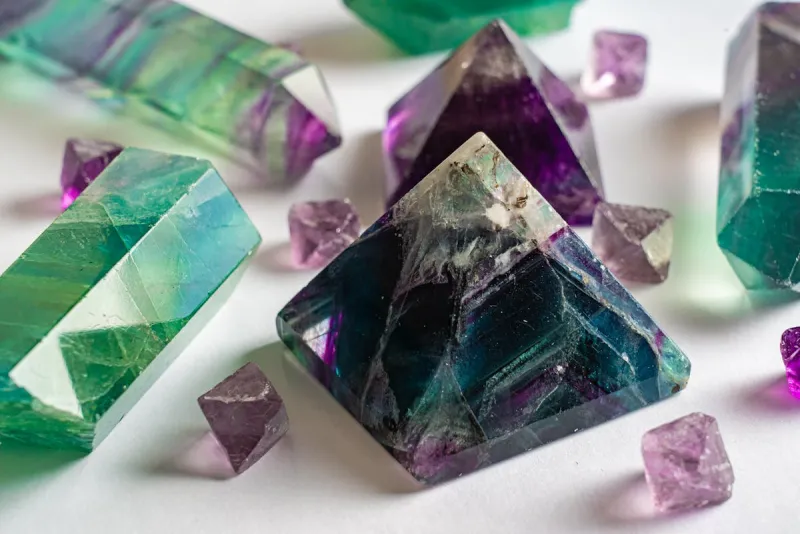
Amethyst is the purple variety of quartz and one of the most popular gemstones in the world. Once considered as precious as rubies and emeralds, amethyst was a stone of royalty, adorning crowns and ecclesiastical rings for centuries. Today, amethyst remains one of the most accessible and attractive coloured gemstones, offering rich purple hues at a fraction of the cost of rarer stones. As the February birthstone, it is a meaningful choice for gifts and personal jewellery alike.
Amethyst Properties and Characteristics
Amethyst is a macrocrystalline variety of quartz (silicon dioxide) with its purple colour caused by iron impurities and natural irradiation. It rates 7 on the Mohs hardness scale, making it durable enough for most types of jewellery, though it benefits from some care to avoid scratches from harder materials.
| Property | Details |
|---|---|
| Mineral | Quartz (SiO2) |
| Mohs Hardness | 7 |
| Refractive Index | 1.544 – 1.553 |
| Specific Gravity | 2.65 |
| Colour Cause | Iron (Fe3+) + irradiation |
| Crystal System | Trigonal |
| Lustre | Vitreous |
| Birthstone Month | February |
| Colour Range | Light lavender to deep reddish purple |
Amethyst Colour Grades
The value of an amethyst is primarily determined by the depth and quality of its colour. The finest amethysts display a rich, saturated purple with red or blue secondary flashes, visible when the stone is tilted in the light.
- Deep purple (Siberian quality) – The most valuable grade, named after the legendary Russian deposits. These stones show vivid purple with flashes of red and blue. Few modern stones achieve this standard.
- Medium purple – An attractive, well-saturated purple that represents excellent value. The most popular choice for fine jewellery.
- Light lavender – Softer, lighter purple stones that are abundant and affordable. These work well in fashion jewellery and larger statement pieces.
- Rose de France – A very light, pinkish-lilac amethyst that has gained popularity for its romantic, feminine appeal.
Colour Zoning
Many amethysts display colour zoning, where bands of deeper and lighter purple alternate within the crystal. A skilled cutter orients the stone to minimise visible zoning in the finished gem. Stones with even colour distribution are more valuable than those with obvious banding.
Amethyst Sources
Brazil
Brazil is the world's largest producer of amethyst, particularly from the states of Rio Grande do Sul, Bahia, and Minas Gerais. Brazilian amethyst ranges from pale lavender to deep purple, and the country's enormous output has kept amethyst prices accessible.
Uruguay
Uruguayan amethyst is generally considered superior in colour to Brazilian material, often displaying deeper, more saturated purple hues. The Artigas department is the primary source.
Zambia
African amethyst from Zambia tends to be a deeper, more saturated purple with reddish undertones. Fine Zambian amethyst is among the best available and is often compared to the historic Siberian material.
Other Sources
Notable amethyst deposits also exist in South Korea, India, Russia, Mexico, the United States (Arizona), Canada, and Madagascar.
Amethyst Treatments
Most gem-quality amethyst is untreated, which is one of the stone's advantages. However, there are some treatments to be aware of:
- Heat treatment – Heating amethyst to temperatures between 300 and 500 degrees Celsius can permanently lighten the colour or change it entirely. Heated amethyst can become yellow (citrine), green (prasiolite), or colourless. This treatment is permanent and stable.
- Irradiation – Some lighter amethyst is irradiated to deepen its colour. This treatment is difficult to detect and is generally stable.
- Synthetic amethyst – Synthetic amethyst is widely available and can be very difficult to distinguish from natural material without advanced testing. Always buy from reputable sources. See our natural vs synthetic guide for more.
Amethyst Pricing
Amethyst is one of the most affordable coloured gemstones, but prices vary significantly with quality:
- Commercial grade (light colour, small sizes): $2 – $10 per carat
- Good quality (medium purple, eye-clean): $10 – $30 per carat
- Fine quality (deep saturated purple, large sizes): $30 – $80 per carat
- Exceptional Siberian-quality: $80 – $150+ per carat for large, top-colour stones
The affordability of amethyst means you can invest in larger, more impressive stones without breaking the budget, making it excellent for statement rings, pendants, and cocktail jewellery.
Buying Tips for Amethyst
- Go for colour – Since amethyst is affordable, there is no reason to compromise on colour. Choose the deepest, most saturated purple your budget allows.
- Check for colour zoning – Look at the stone face-up and from different angles. Even colour distribution is key to a beautiful amethyst.
- Expect eye-clean clarity – Good amethyst should be free of visible inclusions. Included material is too plentiful to settle for.
- Consider larger sizes – Because of its affordability, amethyst is a great choice for larger stones (5+ carats) that would be prohibitively expensive in other gem varieties.
- Match the metal – Purple amethyst pairs beautifully with white metals like white gold, platinum, and silver, as well as rose gold for a warm, romantic look.
Amethyst in Jewellery
With a hardness of 7, amethyst is suitable for rings, earrings, pendants, bracelets, and brooches. While it is durable enough for everyday wear in earrings and pendants, rings should be worn with some care to avoid knocks against hard surfaces. Amethyst is a popular choice for cocktail rings and statement necklaces where the stone can be displayed in a generous size.
Amethyst also pairs beautifully with diamonds in halo settings and is a classic choice for gift jewellery, especially for February birthdays and 6th wedding anniversaries.
Amethyst Care
Amethyst is generally easy to care for but should be protected from prolonged exposure to strong sunlight, which can cause the colour to fade over time. Clean with warm soapy water and a soft brush. Ultrasonic cleaners are safe for untreated amethyst. Avoid steam cleaners and sudden temperature changes. Store amethyst separately from harder gemstones. For full care instructions, visit our jewellery care guide.
Frequently Asked Questions About Amethyst
Why is amethyst so affordable compared to other purple stones?
Amethyst was once extremely rare and valuable, but the discovery of vast deposits in Brazil in the 19th century dramatically increased supply and reduced prices. Today, amethyst is one of the most abundant coloured gemstones, which keeps prices accessible. Compare this with purple sapphire, which is far rarer.
Can amethyst fade in sunlight?
Yes. Prolonged exposure to direct sunlight or intense UV light can cause some amethysts to lose colour intensity over time. Store amethyst jewellery away from direct sunlight when not being worn.
What is the difference between amethyst and purple sapphire?
Amethyst is quartz (hardness 7), while purple sapphire is corundum (hardness 9). Purple sapphire is significantly harder, rarer, and more expensive. See our detailed comparison for more.
Is amethyst the same as citrine?
Amethyst and citrine are both varieties of quartz. Amethyst is purple and citrine is yellow to orange. Heating amethyst can actually convert it to citrine. A stone called ametrine displays both purple and yellow in a single crystal.