Tanzanite: The Rare Violet-Blue Gemstone from Tanzania
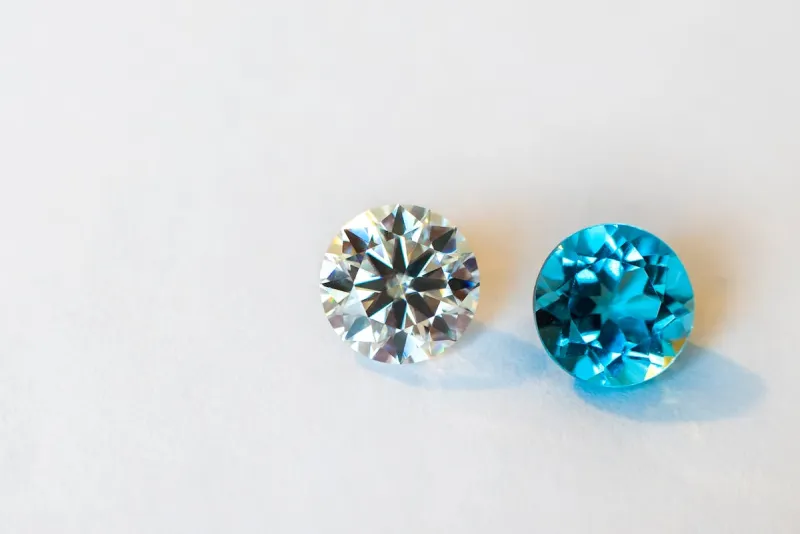
Tanzanite is one of the most remarkable gemstone discoveries of the 20th century. Found in only one place on Earth, a small area near Mount Kilimanjaro in Tanzania, this violet-blue variety of the mineral zoisite was discovered in 1967 and quickly captivated the gem world with its extraordinary colour and rarity. Tiffany & Co. named the stone "tanzanite" and introduced it to the global market, where it has since become one of the most sought-after coloured gemstones. In 2002, tanzanite was added as a December birthstone.
Tanzanite Properties and Characteristics
Tanzanite is the blue-violet variety of the mineral zoisite, a calcium aluminium silicate. One of its most remarkable properties is strong trichroism, meaning the stone displays three different colours when viewed from different crystallographic directions: blue, violet, and burgundy red. Skilled cutters orient the stone to emphasise either the blue or violet face-up colour, depending on market preference.
| Property | Details |
|---|---|
| Mineral | Zoisite (Ca2Al3(SiO4)(Si2O7)O(OH)) |
| Mohs Hardness | 6 – 7 |
| Refractive Index | 1.691 – 1.700 |
| Specific Gravity | 3.35 |
| Colour Cause | Vanadium (V3+) |
| Crystal System | Orthorhombic |
| Trichroism | Blue, violet, burgundy |
| Lustre | Vitreous |
| Birthstone Month | December |
Tanzanite Colour
The most prized tanzanites display a vivid, saturated violet-blue, sometimes described as "ultramarine." The finest stones show a strong blue with violet flashes visible as the stone is tilted. Colour depth is the primary value driver for tanzanite.
- Exceptional (vivid) – Deep, saturated violet-blue with strong colour throughout. The most valuable grade, typically found only in stones over 5 carats.
- Fine – Well-saturated blue-violet that displays rich colour without appearing too dark. Excellent for fine jewellery.
- Good – Medium blue-violet with noticeable colour. Attractive and represents good value.
- Light – Pale lavender-blue, often seen in smaller stones. Affordable but lacks the depth that makes tanzanite distinctive.
Blue vs Violet Orientation
Tanzanite cutters can orient the stone to emphasise either the blue or the violet component. The market generally values a predominantly blue face-up colour with violet undertones, though personal preference plays a role. Strongly violet stones are also beautiful and are preferred by some buyers.
Tanzanite Source
Tanzanite comes from a single source: the Merelani Hills near Arusha, Tanzania, in the shadow of Mount Kilimanjaro. This deposit covers an area of approximately 20 square kilometres and is the only known commercial source of gem-quality tanzanite in the world. The geological conditions required to form tanzanite are so specific that gemmologists believe it is unlikely a comparable deposit will ever be found elsewhere.
The Tanzanian government has divided the mining area into four blocks (A through D), and the finite nature of the deposit is one reason collectors pay close attention to tanzanite. However, rarity alone does not guarantee sustained price appreciation, because consumer demand and market conditions matter as well.
Tanzanite Treatments
Nearly all tanzanite on the market has been heat-treated. Raw tanzanite typically appears brownish or burgundy, and gentle heating at approximately 500-600 degrees Celsius permanently transforms the colour to the desired blue-violet. This treatment is permanent, stable, and universally accepted.
- Heat treatment – Standard and expected. Removes brown and burgundy components to reveal the blue-violet colour. Affects virtually all commercial tanzanite.
- Naturally blue tanzanite – A small percentage of tanzanite emerges from the ground already blue without heat treatment. These stones are sometimes sold at a slight premium, though the colour difference from heated material is typically indistinguishable.
Tanzanite Pricing
- Light colour stones usually sit in the lower commercial price tiers
- Medium-colour stones often occupy the broad middle of the market
- Fine-colour larger stones command materially higher per-carat prices
- Exceptional vivid stones above 5 carats can rise sharply in price
- Museum-quality stones are rare and typically priced privately or through specialist channels
Tanzanite often offers attractive value compared with sapphire of similar visual impact, making it an appealing option for buyers who want a vivid blue-violet stone at a more accessible price point.
Buying Tips for Tanzanite
- Go for colour depth – The deeper and more saturated the colour, the more impressive and valuable the stone. If budget allows, choose stones of at least 2-3 carats, as tanzanite's colour is more apparent in larger sizes.
- Expect eye-clean clarity – Fine tanzanite should be eye-clean. Included material is sufficiently available that there is no need to compromise on clarity.
- View under different lights – Tanzanite can appear more blue under fluorescent light and more violet under incandescent light. The finest stones look beautiful under both.
- Consider durability – With a hardness of 6-7, tanzanite is softer than sapphire or ruby. It is best suited for earrings, pendants, and occasion rings rather than everyday rings.
- White metals are ideal – Tanzanite's cool blue-violet colour is beautifully complemented by white gold and platinum.
Tanzanite in Jewellery
Tanzanite has become a staple of fine jewellery design since its introduction. It is frequently paired with diamonds in halo rings, pendant necklaces, and drop earrings. Tanzanite engagement rings have gained popularity among buyers attracted to its unique colour and relative affordability compared to sapphire.
Due to its moderate hardness and sensitivity to sudden temperature changes, tanzanite is best suited for earrings, pendants, and special-occasion rings rather than everyday wear pieces. Those who choose tanzanite for engagement rings should opt for protective settings such as bezels or substantial halos.
Tanzanite Care
Tanzanite requires careful handling. Avoid ultrasonic and steam cleaners, which can cause thermal shock and potentially crack the stone. Clean with lukewarm soapy water and a very soft brush. Protect tanzanite from sudden temperature changes, hard impacts, and household chemicals. Remove tanzanite rings before physical activities. For full guidance, see our jewellery care guide.
Frequently Asked Questions About Tanzanite
Is tanzanite rarer than diamond?
Tanzanite is found in only one location in the world, making it geologically rarer than diamond. However, rarity alone does not determine price; market demand, marketing, and supply control also play significant roles.
Will tanzanite increase in value?
Tanzanite's single-source status is often cited as a reason it could remain desirable, but gemstone-market predictions are inherently uncertain. Buy tanzanite primarily for its beauty rather than as a speculative investment.
Is tanzanite too soft for rings?
Tanzanite (hardness 6-7) is softer than sapphire or diamond and can be scratched or damaged with rough wear. It can be used in rings, but protective settings and mindful wearing habits are essential. Earrings and pendants are lower-risk options.
What is the December birthstone?
December has three birthstones: tanzanite, turquoise, and zircon. Tanzanite is the most recent addition, designated in 2002. See our birthstone guide for details.