Tourmaline: The Most Colour-Diverse Gemstone
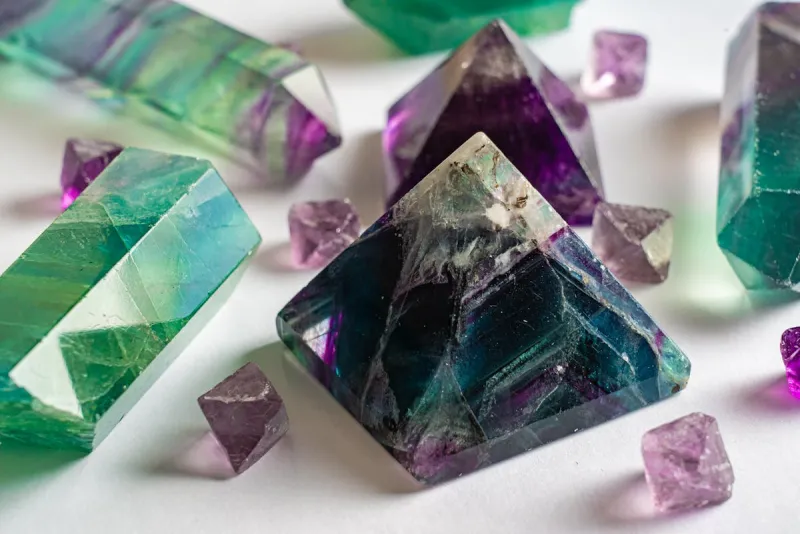
Tourmaline is one of the most colour-diverse gemstones on Earth, occurring in virtually every shade imaginable — from vivid pinks and reds through blues, greens, oranges, and even multicoloured crystals that display several hues within a single stone. This remarkable range has earned tourmaline the nickname "the rainbow gemstone." Prized by collectors and jewellery designers alike, tourmaline is also the birthstone for October, making it a meaningful choice for those born in the autumn months. With varieties that range from affordable to extraordinarily valuable, tourmaline offers something for every taste and budget.
Tourmaline Properties and Characteristics
Tourmaline belongs to a complex group of boron silicate minerals that share a common crystal structure but vary widely in chemical composition. This chemical variability is precisely what gives tourmaline its extraordinary colour range. The mineral forms in trigonal crystals, often with a distinctive rounded triangular cross-section, and exhibits strong pleochroism — meaning it can display different colours or colour intensities when viewed from different angles.
| Property | Details |
|---|---|
| Mineral Group | Boron silicate (complex silicate containing boron) |
| Mohs Hardness | 7 – 7.5 |
| Refractive Index | 1.624 – 1.644 |
| Specific Gravity | 3.06 – 3.26 |
| Crystal System | Trigonal |
| Lustre | Vitreous |
| Cleavage | Indistinct |
| Pleochroism | Moderate to strong |
| Birthstone Month | October |
Tourmaline Varieties
Tourmaline is not a single mineral but a group of related species, each with its own distinctive colour characteristics. The gem trade uses variety names that have become well established among collectors and buyers.
Rubellite (Pink to Red)
Rubellite is the trade name for pink to red tourmaline. The finest rubellites display a saturated, vibrant pinkish-red or purplish-red that rivals ruby in intensity. Unlike many pink tourmalines that shift colour under different lighting, true rubellites maintain their rich red hue in both natural and artificial light. Top-quality rubellites from Nigeria and Mozambique command strong prices in the gem market.
Indicolite (Blue)
Indicolite refers to blue tourmaline, ranging from light sky blue to deep blue with green or violet undertones. Fine indicolite is comparatively rare and highly prized, especially in saturated medium-blue tones that do not appear too dark. The best specimens are sometimes compared to fine sapphire and offer excellent value for a comparable blue hue.
Paraiba Tourmaline (Neon Blue-Green)
Paraiba tourmaline is the most valuable variety, famed for its electrifying neon blue-to-green colour caused by trace amounts of copper. First discovered in 1989 in the Brazilian state of Paraiba, these exceptional stones are discussed in greater detail below.
Chrome Tourmaline (Green)
Chrome tourmaline owes its vivid green colour to chromium and vanadium — the same elements that colour emerald. Found primarily in East Africa, the finest chrome tourmalines display a rich, saturated green that can rival emerald, often with superior clarity. These stones are sometimes called "chrome dravite" and represent some of the most desirable green gemstones available.
Watermelon Tourmaline
Watermelon tourmaline is one of nature's most charming creations: a single crystal with a pink centre surrounded by a green rim, resembling a slice of watermelon. This bicoloured effect occurs when the chemical environment changes during crystal growth. Watermelon tourmaline is typically cut in slices perpendicular to the crystal's length to display the concentric colour zoning, making it a favourite among collectors and designers of unique jewellery pieces.
Black Tourmaline (Schorl)
Schorl, or black tourmaline, is the most abundant tourmaline variety and has been used for centuries in jewellery and as a decorative stone. Rich in iron, schorl is opaque and jet black. It is popular in men's jewellery and has a long history of use in mourning jewellery. In alternative healing traditions, black tourmaline is widely regarded as a protective stone.
Colour and Quality Factors
Given tourmaline's extraordinary colour range, quality assessment varies by variety, but several general principles apply across the board.
- Colour saturation – The most valuable tourmalines in any colour display vivid, well-saturated hues. Stones that appear too light or too dark are less desirable.
- Colour purity – Pure, clean colours without muddy brown or grey overtones are preferred. A bright, pure green commands more than a dull olive green.
- Clarity – Tourmaline commonly contains inclusions, particularly in red and pink varieties. Eye-clean stones are the standard for fine quality, though certain varieties (especially rubellite) are accepted with minor inclusions if the colour is superb.
- Cut quality – Skilled cutters orient tourmaline crystals to maximise colour and minimise the often-darker tone seen along the c-axis. Elongated cuts such as emerald and oval shapes are common, as they suit the crystal's natural form.
- Carat weight – Tourmaline is available in a wide range of sizes. Larger stones with fine colour and clarity command significant premiums, particularly in rare varieties like Paraiba and rubellite.
Tourmaline Origins
Tourmaline is found across the globe, with several regions renowned for producing exceptional material.
- Brazil – Historically the world's most important source, producing virtually every colour of tourmaline. The state of Minas Gerais is legendary for fine greens, pinks, and blues, while Paraiba state yielded the original copper-bearing Paraiba tourmalines.
- Mozambique – A major modern source of copper-bearing Paraiba-type tourmaline, as well as fine rubellites and other colours. Mozambican Paraibas tend to be larger than Brazilian material.
- Nigeria – Produces excellent rubellite and copper-bearing tourmaline, along with a range of other colours.
- Afghanistan – The Nuristan and Kunar provinces yield fine blue and green tourmalines, as well as vivid pinks from pegmatite deposits in remote mountain terrain.
- Madagascar – An important source of a wide variety of tourmaline colours, including fine greens, pinks, and bi-colour specimens.
- United States (Maine and California) – Maine's Mount Mica and California's Himalaya Mine are historic tourmaline localities. American tourmaline, particularly vivid pinks and greens, is prized by collectors.
Paraiba Tourmaline: A Deep Dive
No discussion of tourmaline is complete without a thorough look at Paraiba tourmaline, the variety that transformed the tourmaline market and continues to be among the most valuable coloured gemstones in the world.
In 1989, Heitor Dimas Barbosa discovered an extraordinary new type of tourmaline in the hills of the Brazilian state of Paraiba. These stones displayed a vivid, almost electric neon blue-to-green colour unlike anything previously seen in the gem world. Gemmological analysis revealed that trace amounts of copper — an element never before identified as a colour agent in tourmaline — were responsible for this unique luminosity.
The original Brazilian Paraiba deposit produced only a small quantity of material before being effectively exhausted. In the early 2000s, similar copper-bearing tourmalines were discovered in Mozambique and Nigeria, sparking debate in the trade about whether the name "Paraiba" should apply to all copper-bearing tourmaline or only to Brazilian material. The leading gemmological laboratories now use "Paraiba tourmaline" for any copper-bearing tourmaline displaying the characteristic neon colour, regardless of origin.
- Colour – The defining feature is a vivid, glowing neon blue, blue-green, or green. The finest stones appear to glow from within, an effect sometimes described as "electric" or "swimming pool blue."
- Value – Top-quality Paraiba tourmalines rival and sometimes exceed fine sapphires in price per carat. Exceptional Brazilian stones over 3 carats have sold for over $50,000 per carat at auction.
- Rarity – Paraiba tourmaline is extraordinarily rare. The original Brazilian deposits are largely depleted, and even Mozambican and Nigerian material of fine quality is scarce.
- Identification – Copper content is confirmed through chemical analysis. Reputable gemmological laboratories such as GIA, SSEF, and Gübelin can verify Paraiba status and determine geographic origin.
Tourmaline Treatments
Several treatments are used to enhance tourmaline's appearance. Buyers should always ask about treatments and expect full disclosure from reputable sellers.
- Heating – The most common treatment, used to lighten overly dark tourmalines or improve colour saturation. Heating is permanent and widely accepted in the trade. Many pink and red tourmalines are heated to remove brownish overtones.
- Irradiation – Some tourmalines are irradiated to intensify or alter colour, particularly to deepen pink or red hues. Irradiation is sometimes followed by heating. The colour change is generally stable.
- Clarity enhancement – Filling of surface-reaching fractures with oils or resins is occasionally done, though it is less common in tourmaline than in emerald.
- Coating – Rarely, tourmaline is coated with thin films to alter colour. This is not an accepted practice and should be disclosed.
Tourmaline in Jewellery
Tourmaline is a versatile and practical jewellery stone. With a hardness of 7 to 7.5 on the Mohs scale, it offers good durability for everyday wear, making it suitable for rings, earrings, pendants, and bracelets. Its lack of significant cleavage means it resists chipping better than many other gemstones of similar hardness.
As the October birthstone, tourmaline is a popular choice for birthday jewellery. Its extraordinary colour range means that recipients can choose a shade that truly reflects their personal style — from classic pink to dramatic green, serene blue, or playful watermelon.
Designers frequently use tourmaline in both contemporary and traditional jewellery styles. Bi-colour and watermelon tourmalines are especially favoured for one-of-a-kind statement pieces. Fine rubellites and Paraiba tourmalines appear in high jewellery collections from the world's most prestigious houses.
Buying Tips for Tourmaline
- Prioritise colour – Colour is the primary value driver for tourmaline. Seek vivid, saturated hues without brown or grey overtones. View stones under multiple lighting conditions.
- Match clarity expectations to variety – Green and blue tourmalines are typically eye-clean; rubellites are accepted with minor inclusions if the colour is exceptional.
- Buy from reputable sources – For expensive varieties like Paraiba, always request a gemmological laboratory report from a recognised institution (GIA, SSEF, Gübelin) confirming copper content and, if desired, geographic origin.
- Consider the cut carefully – A well-cut tourmaline will display its colour evenly across the face. Dark stones may have been cut too deep; pale stones too shallow. Look for balanced proportions.
- Ask about treatments – Heating is normal and acceptable. Irradiation is common in pinks and reds. Untreated stones of fine colour may command a slight premium.
- Explore the range – Tourmaline's diversity means there are attractive options at every price point. If Paraiba is beyond budget, fine indicolite or chrome tourmaline offers stunning colour at a fraction of the cost.
Frequently Asked Questions About Tourmaline
What is the most valuable type of tourmaline?
Paraiba tourmaline is by far the most valuable variety. Its unique copper-bearing neon blue-to-green colour makes it one of the most expensive coloured gemstones in the world, with top specimens exceeding $50,000 per carat. Fine rubellite is the next most valuable variety.
Is tourmaline suitable for an engagement ring?
Yes. With a hardness of 7 to 7.5 and no significant cleavage, tourmaline is durable enough for daily wear in a well-designed ring setting. It is a more practical choice than softer gemstones like tanzanite or opal, though it is not as hard as sapphire or diamond.
What is watermelon tourmaline?
Watermelon tourmaline is a bi-coloured variety that displays a pink centre surrounded by a green outer zone, resembling a watermelon slice. It forms when chemical conditions change during crystal growth. Slices cut perpendicular to the crystal axis showcase this distinctive pattern.
How do I care for tourmaline jewellery?
Clean tourmaline with warm soapy water and a soft brush. Avoid ultrasonic cleaners for stones with visible inclusions or fracture fillings. Tourmaline is reasonably durable but should be protected from hard knocks and extreme temperature changes. For detailed advice, see our jewellery care guide.
Is tourmaline the October birthstone?
Yes. Tourmaline shares October birthstone status with opal. Its wide colour range makes it an especially versatile birthstone, as recipients can choose the shade they like best. See our full birthstone guide for more information.