What Is a Diamond?
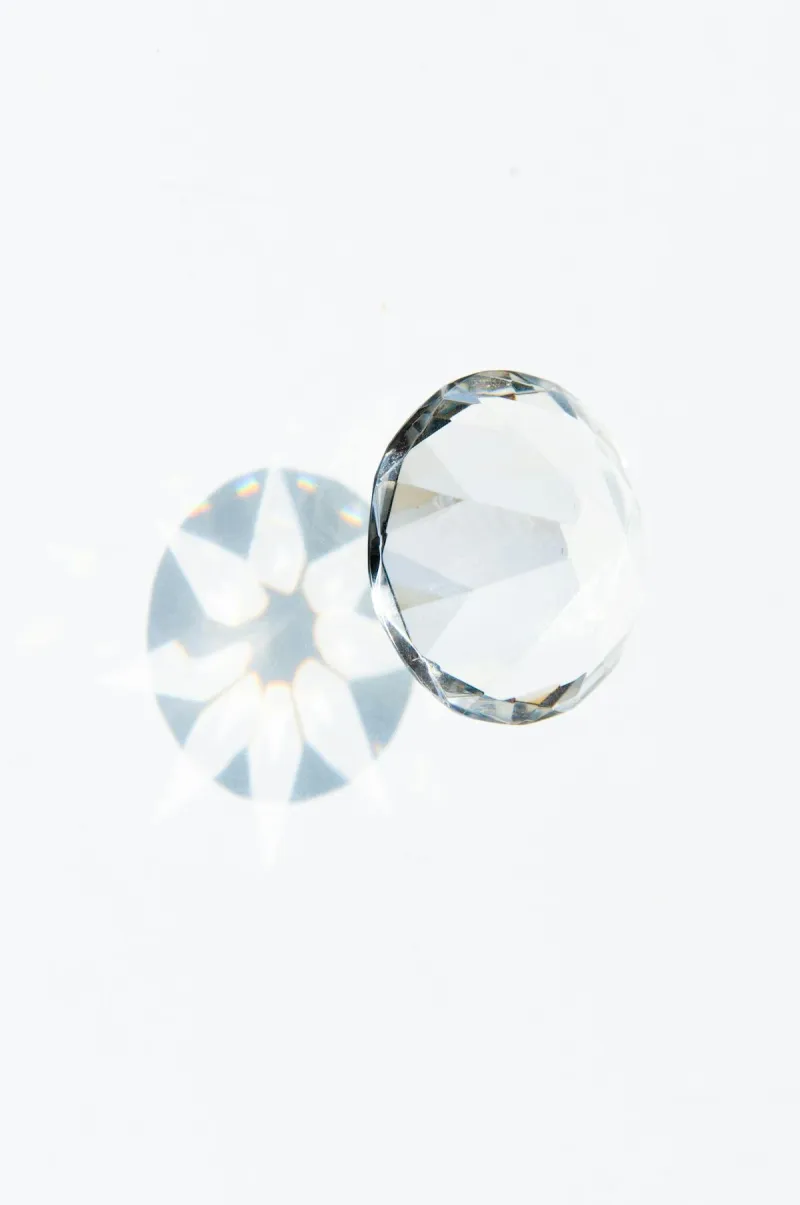
A diamond is a solid form of pure carbon whose atoms are arranged in a crystal structure called a diamond cubic lattice. This unique arrangement is responsible for the extraordinary hardness, exceptional brilliance, and remarkable thermal conductivity that set diamonds apart from every other natural material on Earth. While most people associate diamonds with engagement rings and fine jewellery, they also serve critical roles in industrial cutting, scientific instruments, and high-performance electronics.
Understanding what a diamond truly is requires looking beyond the jewellery display case. In this guide we explore the geological origins, chemical composition, physical properties, historical significance, and modern uses of diamonds so you can appreciate why this gemstone continues to captivate humanity.
How Diamonds Form in Nature
Natural diamonds crystallise deep within the Earth's mantle, roughly 150 to 700 kilometres below the surface. At these depths, temperatures exceed 1,000 degrees Celsius and pressures reach 45 to 60 kilobars, which is about 50,000 times atmospheric pressure at sea level. Under these extreme conditions, carbon atoms bond together into the rigid three-dimensional lattice that defines a diamond.
Most natural diamonds formed between one billion and 3.5 billion years ago. They remained trapped in the mantle until violent volcanic eruptions carried them to the surface through narrow, carrot-shaped conduits called kimberlite pipes and, less commonly, lamproite pipes. These eruptions were extraordinarily fast, sometimes moving material at speeds exceeding 20 kilometres per hour, which prevented the diamonds from converting to graphite during their ascent.
Types of Diamond Deposits
- Primary deposits: Diamonds found within the original kimberlite or lamproite rock where they were transported to the surface.
- Secondary (alluvial) deposits: Over millions of years, weathering and erosion can free diamonds from their host rock. Rivers and ocean currents then carry them to riverbeds, beaches, and the ocean floor.
- Marine deposits: Found along coastlines, particularly in Namibia and South Africa, where ancient riverbeds deposited diamond-bearing gravel into the sea.
For a deeper look at extraction methods, read our guide on how diamonds are mined.
Chemical Composition and Crystal Structure
A diamond is composed almost entirely of carbon. In the diamond cubic crystal system, each carbon atom is covalently bonded to four neighbouring carbon atoms in a tetrahedral arrangement. This creates an incredibly strong and uniform lattice that extends in all directions, giving diamond its legendary hardness.
Despite being pure carbon, diamond is dramatically different from graphite, the other well-known carbon allotrope. In graphite, carbon atoms form flat, hexagonal sheets that slide over one another easily, which is why graphite feels slippery and works as a lubricant. In diamond, the three-dimensional bonding prevents any such movement.
Trace Elements and Colour
While the ideal diamond is colourless, most natural diamonds contain tiny amounts of impurity elements or structural defects that produce colour:
- Nitrogen: The most common impurity, responsible for yellow and brown tints. Diamonds are classified as Type Ia (aggregated nitrogen) or Type Ib (isolated nitrogen atoms) based on how nitrogen is distributed.
- Boron: Creates blue diamonds. Boron-bearing diamonds are classified as Type IIb and are extremely rare.
- Hydrogen: Can contribute to violet and grey hues.
- Radiation exposure: Natural radiation over geological time can produce green diamonds. Post-growth irradiation and annealing can create a range of fancy colours.
- Structural defects: Distortions in the crystal lattice can produce pink and red diamonds, the rarest of all natural diamond colours.
To understand how these colour differences are graded, visit our diamond colour guide.
Physical Properties of Diamond
Diamonds possess a combination of physical properties unmatched by any other natural substance. These properties are what make diamond both a prized gemstone and an invaluable industrial material.
| Property | Value | Significance |
|---|---|---|
| Hardness (Mohs scale) | 10 | Hardest known natural material; resistant to scratching |
| Refractive Index | 2.417 | High light refraction creates exceptional brilliance |
| Dispersion | 0.044 | Splits white light into spectral colours (fire) |
| Density | 3.52 g/cm³ | Moderately heavy for a gemstone |
| Thermal Conductivity | ~2,200 W/mK | Highest of any natural material; conducts heat rapidly |
| Crystal System | Cubic (isometric) | Determines optical symmetry and cutting potential |
| Cleavage | Perfect in four directions | Allows skilled cutters to split rough diamonds along crystal planes |
Hardness vs. Toughness
A common misconception is that diamonds are indestructible. While diamond is the hardest natural material, meaning nothing else can scratch it, it is not the toughest. Toughness refers to resistance to breaking or chipping. Diamond has perfect cleavage in four directions, which means a sharp blow at the right angle can split a diamond. This is actually an advantage for gem cutters, who use cleavage planes to shape rough stones, but it means a diamond ring can chip if struck hard against a hard surface.
Brilliance, Fire, and Scintillation
The visual appeal of a polished diamond comes from three optical phenomena:
- Brilliance: The white light reflected back to the viewer from internal and external surfaces. Diamond's high refractive index means that light entering the stone is bent significantly, and total internal reflection keeps much of that light bouncing inside until it exits through the top.
- Fire: The separation of white light into its spectral colours as it passes through the diamond. Diamond's dispersion value of 0.044 is higher than most gemstones, producing vivid flashes of colour.
- Scintillation: The pattern of bright and dark areas that shifts as the diamond, the light source, or the observer moves. A well-cut diamond produces a balanced, lively scintillation pattern.
The quality of a diamond's cut has the single greatest influence on these optical effects. Learn more in our diamond cut guide.
A Brief History of Diamonds
Diamonds have been known to humanity for thousands of years, though their role has evolved dramatically over the centuries.
Ancient and Medieval Periods
The earliest known diamonds were collected from riverbeds in India, possibly as early as the fourth century BCE. In ancient India, diamonds were valued for their ability to refract light and were used as religious icons and engraving tools. The ancient Romans believed diamonds were splinters from falling stars or tears of the gods.
During the Middle Ages, diamonds were thought to have medicinal and protective powers. They were worn as talismans in battle and were sometimes ingested in ground form as a supposed cure for illness. It was not until the late medieval period that diamonds began to be faceted for their beauty rather than simply polished.
The Modern Diamond Era
The discovery of massive diamond deposits in South Africa in the late 1860s transformed the global diamond market. The founding of De Beers Consolidated Mines in 1888 led to a controlled supply chain that shaped diamond pricing for over a century. The famous "A Diamond Is Forever" advertising campaign, launched in 1947, cemented the diamond engagement ring as a cultural norm in Western societies.
Today, diamonds are mined on every continent except Europe and Antarctica, with major production in Russia, Botswana, Canada, Angola, and the Democratic Republic of Congo. The rise of lab-grown diamonds has added a new chapter to the diamond story, offering consumers a chemically identical alternative grown in a matter of weeks rather than billions of years.
Natural Diamonds vs. Lab-Grown Diamonds
Lab-grown diamonds share the same carbon crystal structure, hardness, brilliance, and fire as natural diamonds. They are produced using two main methods: High Pressure High Temperature (HPHT) and Chemical Vapour Deposition (CVD). The primary differences between natural and lab-grown diamonds are origin, rarity, and resale value. For a full comparison, see our natural vs. lab diamonds guide.
Industrial and Scientific Uses
Only about 20 percent of mined diamonds are of gem quality. The remaining 80 percent, along with synthetic industrial diamonds, are used in a wide range of applications:
- Cutting and grinding: Diamond-tipped saw blades, drill bits, and grinding wheels are essential in construction, mining, and manufacturing.
- Polishing: Diamond paste and slurry are used to achieve ultra-smooth finishes on optical components and precision instruments.
- Electronics: Diamond's exceptional thermal conductivity makes it useful as a heat sink in high-power electronic devices.
- Scientific instruments: Diamond anvil cells generate extreme pressures for physics and materials science research.
- Medical tools: Diamond-edged scalpels provide extremely sharp, precise cutting for eye surgery and other delicate procedures.
How Diamonds Are Graded
Gem-quality diamonds are evaluated using the 4Cs system developed by the Gemological Institute of America: Cut, Color, Clarity, and Carat Weight. Each factor is assessed independently, and together they determine a diamond's overall quality and market value. Reputable grading laboratories issue certificates that document these assessments. Our diamond certification guide explains which labs to trust and how to read a grading report.
Frequently Asked Questions
Is a diamond the hardest substance on Earth?
Diamond is the hardest naturally occurring substance, scoring 10 on the Mohs hardness scale. A few synthetic materials, such as aggregated diamond nanorods and wurtzite boron nitride under certain conditions, may exceed diamond's hardness, but these are not found in nature.
Can a diamond break?
Yes. While diamonds are extremely hard and resistant to scratching, they can chip or fracture if struck at the right angle along a cleavage plane. Hardness and toughness are different properties.
Are all diamonds clear and colourless?
No. Diamonds occur in virtually every colour of the spectrum. Yellow and brown are the most common tinted colours, while blue, green, pink, and red diamonds are exceedingly rare and valuable. These are known as fancy colour diamonds.
How old are natural diamonds?
Most natural diamonds are between one and 3.5 billion years old, making them among the oldest objects you can hold in your hand. Some diamonds contain inclusions that provide valuable information about conditions deep within the early Earth.
What is the difference between a diamond and a crystal?
A diamond is a specific type of crystal made of carbon. The word "crystal" describes any solid whose atoms are arranged in a highly ordered, repeating pattern. Many minerals form crystals, but diamond's particular carbon lattice gives it properties no other crystal shares.
Conclusion
A diamond is far more than a sparkling gemstone. It is a geological marvel billions of years in the making, a material with unmatched physical properties, and a cultural icon that has fascinated civilisations throughout history. Whether you are drawn to diamonds for their beauty, their science, or their symbolism, understanding what a diamond truly is will deepen your appreciation and help you make smarter choices when buying one.
Ready to learn more? Explore the 4Cs of diamond quality or discover how to choose the perfect diamond for your needs.