Natural vs. Lab-Grown Diamonds: A Balanced Comparison
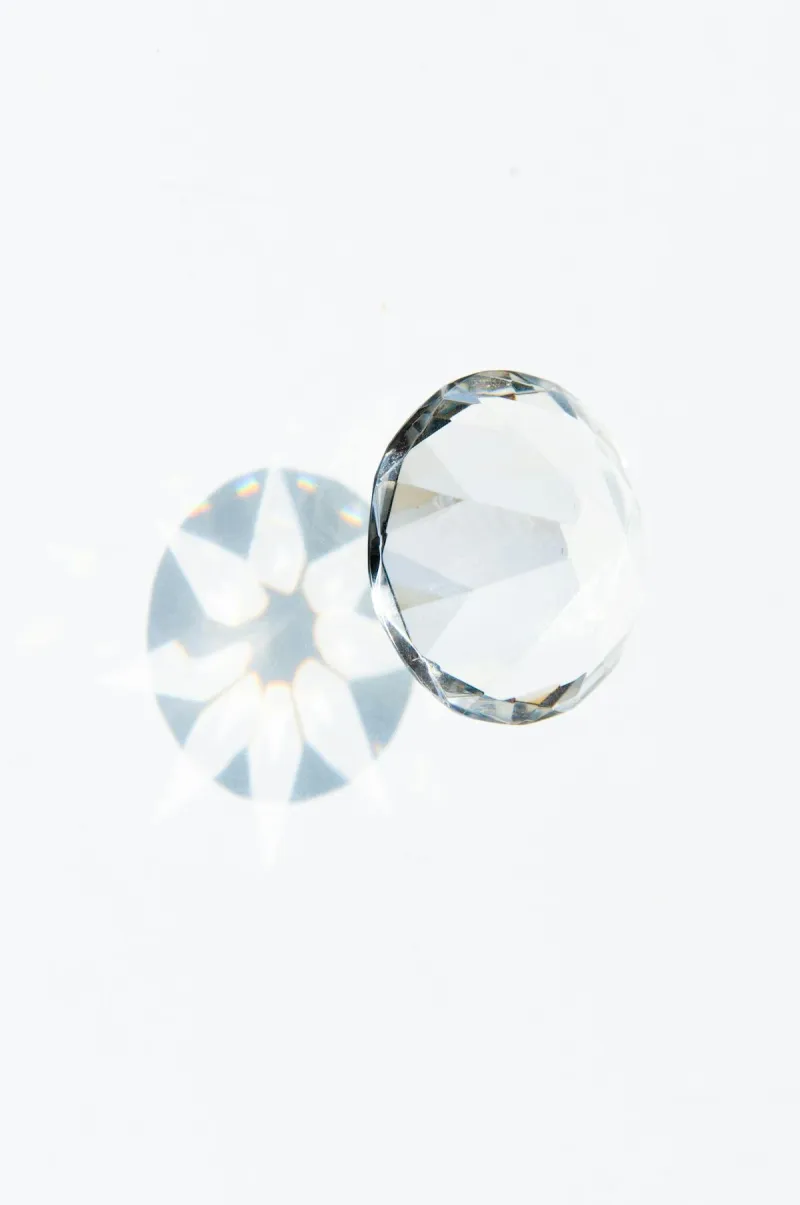
The rise of lab-grown diamonds has given consumers more choices than ever before. These stones share the same chemical composition, crystal structure, and optical properties as natural diamonds, yet they are produced in weeks rather than billions of years and cost significantly less. This guide provides an objective comparison of natural and lab-grown diamonds across every factor that matters: physical properties, price, resale value, environmental impact, and emotional significance. By the end, you will have the information you need to decide which option is right for you.
Are Lab-Grown Diamonds Real Diamonds?
Yes. Lab-grown diamonds are chemically, physically, and optically identical to natural diamonds. They are composed of pure carbon arranged in a diamond cubic crystal lattice. They have the same hardness (10 on the Mohs scale), the same refractive index (2.417), the same thermal conductivity, and the same brilliance and fire. The Federal Trade Commission (FTC) recognises lab-grown diamonds as real diamonds, and major grading laboratories like GIA and IGI certify them using the same 4Cs criteria.
The only difference is origin. Natural diamonds formed in the Earth's mantle over one to three billion years. Lab-grown diamonds are created in a controlled laboratory environment using one of two methods: High Pressure High Temperature (HPHT) or Chemical Vapour Deposition (CVD).
How Lab-Grown Diamonds Are Made
High Pressure High Temperature (HPHT)
HPHT mimics the natural conditions under which diamonds form in the Earth's mantle. A small diamond seed crystal is placed in a press along with a carbon source (typically graphite) and a metallic catalyst (usually iron, nickel, or cobalt). The press generates pressures of approximately 5 to 6 gigapascals and temperatures of 1,300 to 1,600 degrees Celsius. Under these conditions, the carbon dissolves in the metallic catalyst and precipitates onto the seed crystal, gradually building a larger diamond over days to weeks.
Chemical Vapour Deposition (CVD)
CVD grows diamonds from a carbon-rich gas, typically methane, in a vacuum chamber at much lower pressures. A thin diamond seed plate is placed in the chamber, which is filled with a hydrogen-methane gas mixture. The gas is energised using microwaves or hot filaments, breaking the methane molecules into individual carbon atoms that crystallise onto the seed plate layer by layer. CVD operates at lower pressures and moderate temperatures (700 to 1,200 degrees Celsius), typically taking two to four weeks to grow a gem-quality stone.
HPHT vs. CVD at a Glance
| Factor | HPHT | CVD |
|---|---|---|
| Pressure | ~5-6 GPa (very high) | Below atmospheric (low) |
| Temperature | 1,300-1,600°C | 700-1,200°C |
| Growth direction | Multi-directional | Layer by layer (single direction) |
| Typical inclusions | Metallic flux inclusions | Carbon deposits, strain lines |
| Energy consumption | Higher (extreme pressure) | Generally lower |
| Current market share | Declining | Growing; preferred for gem-quality |
Post-Growth Treatments
Most lab-grown diamonds undergo some post-growth treatment to improve colour. HPHT processing can remove brown tones from CVD-grown diamonds, while controlled annealing relieves internal stresses. Irradiation can produce fancy colours like blue, green, or pink. These treatments are standard industry practice and should be disclosed by the retailer. Reputable grading reports from IGI or GIA will note any detectable treatments.
How to Identify a Lab-Grown Diamond
Lab-grown and natural diamonds cannot be distinguished by the naked eye or with standard gemological instruments. Identification requires advanced laboratory equipment that detects growth patterns, fluorescence characteristics, phosphorescence, and trace elements unique to each formation method. Most lab-grown diamonds are also laser-inscribed on the girdle with their report number and a notation that the stone is lab-grown.
Key Differences at a Glance
| Factor | Natural Diamond | Lab-Grown Diamond |
|---|---|---|
| Chemical composition | Pure carbon (C) | Pure carbon (C) |
| Hardness | 10 Mohs | 10 Mohs |
| Brilliance and fire | Identical optical properties | Identical optical properties |
| Formation time | 1 to 3 billion years | 2 to 6 weeks |
| Price (approx.) | Baseline | 60-85% less than natural |
| Resale value | Retains 30-50% of retail | Minimal; market still developing |
| Rarity | Finite natural supply | Unlimited production potential |
| Certification | GIA, AGS, IGI, HRD | IGI (most common), GIA |
| Environmental impact | Mining impact varies by source | Energy-intensive production |
Price Comparison
The most dramatic difference between natural and lab-grown diamonds is price. As of 2025-2026, lab-grown diamonds typically cost 60 to 85 percent less than comparable natural diamonds. A one-carat, G-colour, VS1-clarity, excellent-cut natural diamond might retail for around 5,000 to 7,000 pounds, while a lab-grown diamond with identical specifications might cost 800 to 1,500 pounds.
Lab-grown diamond prices have been declining steadily as production technology improves and more manufacturers enter the market. This trend is expected to continue, which has implications for long-term value retention.
What This Means for Buyers
- Lab-grown diamonds allow you to get a significantly larger or higher-quality stone for the same budget.
- If resale value is not a concern, lab-grown offers exceptional beauty per pound spent.
- If resale, trade-in potential, or heirloom positioning matters to you, natural diamonds generally have the stronger secondary-market case.
Resale Value and Long-Term Worth
Natural diamonds have an established secondary market. While they often lose value from their retail purchase price, they can usually be resold, traded in, or passed down as heirlooms with some recognised market value. Rare natural diamonds, such as fancy colours or exceptionally large stones, belong to a narrower segment where collector demand can be stronger.
Lab-grown diamonds currently have limited resale value. Because production capacity is theoretically unlimited and prices continue to fall, a lab-grown diamond purchased today may be worth significantly less in the future. Most jewellers and diamond buyers offer little to nothing for second-hand lab-grown stones. This is an important consideration for buyers who care about the financial aspect of their purchase.
Environmental and Ethical Considerations
Both natural and lab-grown diamonds have environmental and ethical dimensions, and neither option is perfectly clean.
Natural Diamond Mining
- Open-pit and underground mining disturb large areas of land and generate significant waste rock.
- Water usage and contamination are concerns at some mining operations.
- The Kimberley Process was established to prevent conflict diamonds from entering the market, but it has been criticised for its limited scope and enforcement.
- Some mining operations, particularly in Canada and Botswana, have strong environmental and labour standards and contribute significantly to local economies.
Lab-Grown Diamond Production
- Growing diamonds requires substantial energy, particularly the HPHT method. If that energy comes from fossil fuels, the carbon footprint can be significant.
- CVD production generally uses less energy but still requires power-intensive processes.
- Lab-grown diamonds avoid the land disturbance, water issues, and conflict concerns associated with mining.
- Some lab-grown producers are transitioning to renewable energy, which would significantly improve their environmental profile.
For a broader look at responsible sourcing, visit our ethical diamonds guide.
Quality and Beauty
In terms of appearance, a well-cut lab-grown diamond is indistinguishable from a well-cut natural diamond to the naked eye and even under standard gemological inspection. The only reliable way to tell them apart is through advanced laboratory equipment that detects subtle growth patterns and trace elements unique to each formation method.
Both natural and lab-grown diamonds are graded on the same 4Cs system. You should apply the same quality standards regardless of origin: prioritise excellent cut, choose an appropriate colour grade, ensure the stone is eye-clean, and select a carat weight that fits your budget and desires.
Emotional and Symbolic Value
For some buyers, the billions-of-years origin story of a natural diamond adds irreplaceable emotional significance. The idea that a stone survived a volcanic journey from deep within the Earth carries romantic and symbolic weight that a laboratory process cannot replicate.
For others, the appeal of lab-grown diamonds lies in their modern, ethical narrative and the practical advantage of being able to afford a larger, higher-quality stone. Neither perspective is wrong; it is a personal decision that depends on your values and priorities.
How to Decide
Consider the following questions to guide your decision:
- Is resale value important to you? If yes, natural diamonds are the safer choice.
- Is getting the largest, most beautiful stone within budget your priority? If yes, lab-grown diamonds offer dramatically more for your money.
- Do you value the natural origin story? If the geological history and rarity of a natural diamond are important to you, that emotional factor is worth paying for.
- Are ethical concerns a priority? Both options have trade-offs. Research the specific producer or retailer's sourcing practices.
- Is this an heirloom piece? Natural diamonds have a longer track record as heirlooms with enduring value. Lab-grown diamonds are still too new to know how future generations will perceive them.
Frequently Asked Questions
Can a jeweller tell the difference between natural and lab-grown diamonds?
Not with standard tools. A loupe or standard gemological microscope cannot distinguish between them. Only advanced laboratory equipment that analyses growth patterns, fluorescence characteristics, and trace elements can reliably identify a lab-grown diamond.
Will lab-grown diamond prices keep falling?
Most industry analysts expect lab-grown diamond prices to continue declining as production technology becomes more efficient and competition increases. This is one reason their resale value is currently low.
Do lab-grown diamonds last as long as natural diamonds?
Yes. Lab-grown diamonds have identical physical properties to natural diamonds, including the same hardness and durability. They will not fade, cloud, or degrade over time.
Should I disclose that my diamond is lab-grown?
There is no legal obligation to disclose in personal contexts, but sellers must disclose that a diamond is lab-grown at the point of sale. Many people are proud of their choice and share it openly, while others prefer to keep it private. It is entirely a personal decision.